
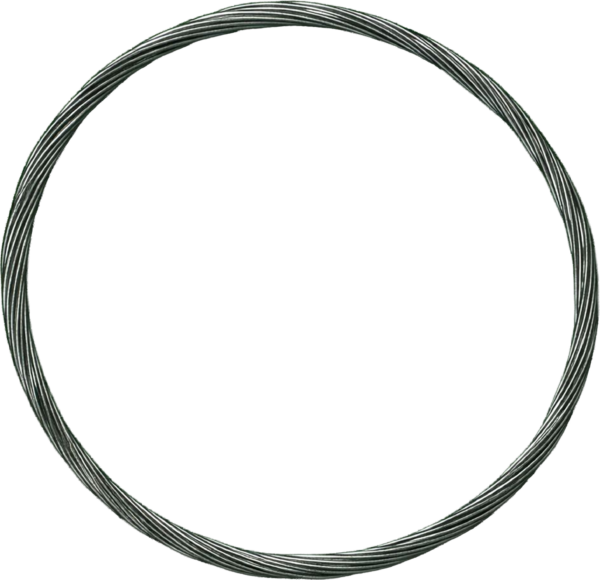
DESIGN APPROACH:
• EXTENDING THE DEFORMATION PATH BY INCREASING THE NUMBER OF WINDINGS
• CONTROLLED AND TIME-DISTRIBUTED DISSIPATION OF ENERGY
• STABLE AND PREDICTABLE RING BEHAVIOR UNDER LOAD
• ADJUSTABLE ENERGY MANAGEMENT ACCORDING TO SYSTEM REQUIREMENTS
ROLE WITHIN THE SYSTEM (ADVANCED APPLICATIONS)
This multi-wound ring functions not as a simple connection or passive dissipating element within the system, but as a structural reference component that directs load behavior and controls energy flow. The high number of windings and the preservation of geometric consistency ensure that the ring operates under impact not randomly, but in a predefined manner. Rather than directly resisting sudden impact loads, the ring distributes energy throughout the system over a controlled deformation process. During this process, the interaction between the windings prevents deformation from concentrating at a single point, contributing to a circumferential balancing of the load. This behavior can only be achieved in structures with high geometric accuracy and flawless winding continuity. Maintaining the winding axis during production, ensuring consistent spacing between windings, and preserving the planarity of the ring are critical for achieving the expected behavior within the system. For this reason, the ring is not positioned as a component used everywhere, but rather in areas where system performance needs to be precisely adjusted and where tolerances are critical. This role is defined not only by the load-bearing capacity of the component, but also by its manufacturing precision, geometric consistency, and repeatable behavior.